
UNIT 2: SCHOOL TALKS
THAM KHẢO ĐÁP ÁN CÁC PHẦN SAU:
Reading Unit 2 Lớp 10 Trang 22
Speaking Unit 2 Lớp 10 Trang 24
Listening Unit 2 Lớp 10 Trang 26
Writing Unit 2 Lớp 10 Trang 27
Language Focus Unit 2 Lớp 10 Trang 29
Grammar Notes (Chủ điếm ngữ pháp)
| Wh – word + be + subject + complement … ? |
What are you interested in? Where is she?
2. Với câu có modal verbs (will / can, may, could, must, ….)
| Wh — word + modal verb + subject + main verb + … ? |
3. Với câu có động từ thường (ordinary verb):
| Wh – word + do / does / did + subject + main verb + … ? |
a. Gerund as subject: danh động từ làm chù ngữ để diễn tả ý tổng quát.
Ex: Swimming is a good exercise.
Learning languages requires patience.
b. Gerund as complement (bổ từ)
My desire is taking care of my mother.
c. Gerund as apposition (từ đồng vị)
Ex: His dream, traveling around the world, never comes true.
d. Object of a preposition (túc từ cho giới từ)
Ex: Jack is interested in playing football.
e. Object of a verb (túc từ cho động từ)
Ex: She dislikes writing letters.
f. Một số các động từ theo sau là danh động từ làm túc từ:
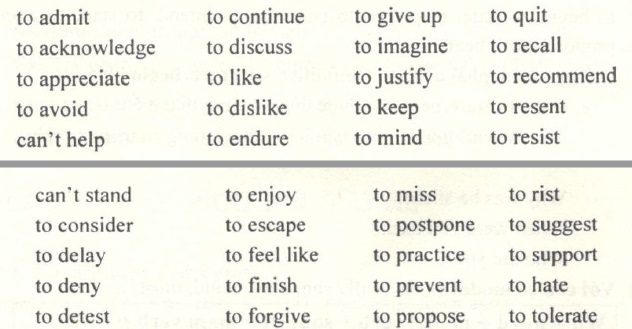
Ex: I dislike your ordering me to do things.
—> I dislike you ordering me to do things.
He suggested our going to the movie with him.
—> He suggested us going to the movie with him.
a. Một số động từ theo là động từ nguyên mẫu vói các cấu trúc sau:
1/ Main verb + to – infinitive
Ex: He wanted to buy a new car.
2/ Main verb + object + to – infinitive
Ex: He wanted me to buy a new car.
She asked Jack to see the manager.
b. Động từ nguyên mẫu có the theo sau các tính từ diễn tả tình cảm:
Ex: Tom is eager to please everybody.
c. Động từ nguyên mẫu có thể theo sau danh từ để phụ nghĩa cho danh từ đó:
Ex: Water to drink is scarce in the desert.
to begin, to hate, to prefer, to continue, to intend, to start, to attempt, to propose, can’t bear.
* Tuy nhiên, phải dùng to – infinitive sau start /begin khi:
a. Động từ start /begin đã được dùng ở dạng tiếp diễn
Ex: When I got off the train it was beginning /starting to rain.
b. Theo sau động từ start /begin là động từ understand và realize.
Ex: She began to understand /to realize what he really wanted.
4. Sau các động từ allow, advise, forbid, permit và recommend, gerund được dùng khi không có túc từ.
Ex: Sorry, we don’t allow smoking in this room.
We don’t allow people to smoke in this room.
I wouldn’t advise taking the car.
I wouldn’t advise you to take the car.
5. Sự khác nhau về ý nghĩa giữa cách dùng danh động từ và động từ nguyên mẫu sau một số động từ.
a. • stop to do something: dừng lại để làm gì.
Ex: He stopped to have a rest because he felt tired.
• stop doing something: chấm dứt một việc gì.
Ex: He stopped smoking when the doctor told him how dangerous it was.
b. • remember to do something: nhớ làm gì
Ex: Remember to turn off the lights when you leave.
• remember doing something: nhớ đã làm gì
Ex: I’m sure I locked the door. I remember locking it.
c. • regret to do something: tiếc phải làm gì
Ex: I regret to tell you that your application has been turned down.
• regret doing something: tiếc đã làm gì
Ex: He regretted going to Nha Trang for his summer holiday.
d. • forget to do something: quên làm gì
Ex: Sorry, I forget to buy some sugar.
• forget doing something: quên đã làm gì
Ex: I will never forget seeing the Queen.
e. • try to do something: cố gắng làm gì
Ex: He tried to learn well for the exam.
• try doing something: thử làm gì
Ex: Try putting some more vinegar. That might make it taste better.
f. • need to do something: cần phải làm gì
Ex: You need to work harder if you want to succeed.
• need doing something: cần phải được làm gì (bị động)
g. • like to do something: muốn làm gì
Ex: I like to get up early so that I can do morning exercise.